
Pinned

Dec '25 •
Welcome. ** START HERE **
Welcome to something that has been in the works for many years! Tell us about yourself. Also go to the Courses and Dive into the First Course and get a taste for what Sid has in store for everyone and also I will be adding years of experience as well as Shawn Lane's tech and student of many years! This Group is for you guys and I hope yall find a home here and we appreciate and love every one of yall!
10h •
Here is the Links to Superposition
https://www.youtube.com/@Superposition-8 If anyone wants to add all the video links as comments feel free to do so
1
0
21h •
Updates Made and Join me live tonight at 7PM CST
Ok so for all current members nothing changes but we did get rid of the free tier. The ones who are currently on it stay on it and nothing changes. We we are offering now is full access with a 7 day free trial and the rates went up to $49 per month or $400 per year. Again, those members on the founders tier stay the same as long as you stay a member! Looks like I will be mobile very soon and will be traveling around and Interviewing Music Store and Venue owners, exceptional musicians and Shawns friends, family, and students as I travel around. If you got some cool destinations let me know and if you got a place for an RV to set up in the process definitely let me know! See everyone tonight at 7PM
3d •
Remembering Shawn Lane — 23 Years Later
Today marks 23 years since Shawn Lane passed away. Shawn left us far too soon, but the depth of his musicianship, imagination, technical ability, harmonic understanding, humor, and unique way of seeing the guitar still affects players all over the world. For those of us who knew him, worked with him, learned from him, or have spent years studying what he left behind, Shawn was never just a fast guitar player. He was a complete musician with an extraordinary ear, an endless curiosity, and a way of hearing connections that many of us are still working to understand. This community exists in part because that work deserves to be preserved, studied seriously, and carried forward musically—not reduced to a few clips, licks, or myths. The best way we can honor Shawn is to keep learning. Keep listening. Keep asking better musical questions. Keep putting the work into our own playing. Thank you to everyone here who cares about the music deeply enough to be part of that. –––––––––––––––––––––––––––––– In that spirit, I released a new lesson today on one of the most important ideas in improvisation: THINK CHORD, NOT KEY. Most players see an A minor blues and immediately stay in A minor pentatonic for the entire progression. That can sound good—but if you want your lines to truly follow the music, you have to see and hear the chord movement underneath the scale. In the lesson, I break down several ways to approach the changes: • Target the 1, b3, and 5 of every minor chord • Move minor pentatonic ideas from A minor to D minor to E minor • Connect minor triads and minor 7 arpeggios • Use Dorian, harmonic minor, and other colors intentionally • Create tension over E7#9 and resolve it back to A minor • Stop getting trapped in isolated scale shapes Watch the new lesson here: https://www.youtube.com/watch?v=ZOt7sNDKXsk This is exactly the kind of fretboard visualization, interval awareness, harmonic understanding, and practical guitar application we are building inside The Shawn Lane Guitar Method.
1-30 of 268
skool.com/shawnlane
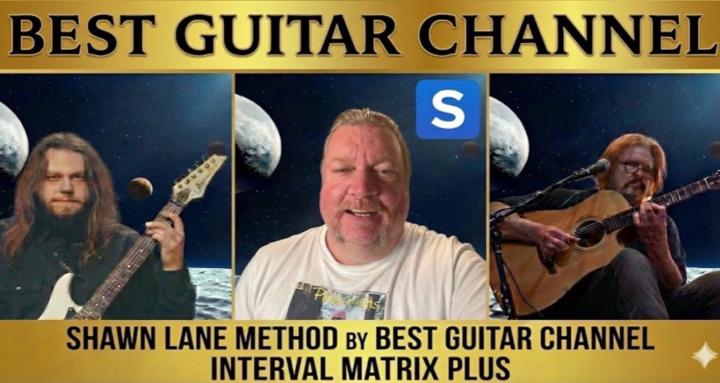
Master the impossible. Learn the Shawn Lane Method. 🎸 Unlock speed, fluidity, and freedom on the fretboard from Shawn Lane's actual Students.
Leaderboard (30-day)
1

+12
2

+7
3

+4
4
+4
5

+4
Powered by