
Pinned

Apr 2 •
Introduction
Welcome to the MAUNI – London Recovery Coaching Campus on Skool. I’m @David Collins, and I’d like to invite you to join us as we explore the art and skill of recovery coaching. Below, you’ll find a short introduction from me, followed by a more in-depth 7-minute overview to help you better understand what we do and why it matters. We run live classes every Tuesday and Thursday morning—be sure to check the calendar above for the full schedule. You can also follow: @Tia Boulton for ongoing coaching supervision and support. @Paula Perkusic our CEO would also love to hear from you, please feel free to reach out to her anytime. We look forward to learning with you.
11
0
16d •
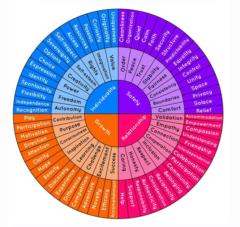
Intrinsic plus Extrinsic Management and Leadership
TWO WAYS TO GET SOMEONE TO SHOW UP There are basically two ways to get a person moving. You can hand them a reason from the outside, a bonus, a title, a deadline with teeth. Or you can tap into a reason that's already living inside them, curiosity, pride in the craft, the simple fact that the work matters to them. Management theory calls these extrinsic and intrinsic motivation, but strip the jargon away and it's just this: are people doing the work because they must, or because they want to? Both exist in every workplace, all the time. Nobody works purely for the love of it, bills are real. And nobody works purely for the pay-check either, not for long, anyway. The honest answer is that most of us live somewhere in the middle, and where we land on that spectrum on any given Tuesday says a lot about how the week is going to feel. What's changed is the cost of getting the balance wrong. Command-and-control leadership, watch closely, reward compliance, punish deviation, used to be enough to keep a factory line moving. It doesn't hold up against the kind of ambiguous, fast-moving problems most teams face now. You can't supervise your way to a good idea. "Tell me what happened and I'll tell you what to do." versus "What do you think our best options are here?" That's the whole shift, really, captured in one exchange. The first question closes a conversation down. The second one opens it up and it's the difference between a team that waits to be told and one that thinks.
0
0

18d •
A Spider’s Web - Human Wellness, Recovery, and Connection
There are days when wellness doesn’t look like a breakthrough. It looks like making it through one difficult evening. Answering one message. Getting up on a quiet morning and deciding not to disappear from your own life. That’s where the image of a spiderweb becomes unexpectedly useful. The web appears as biology, metaphor, memory, creativity, spirituality, community, and sometimes a trap. It is delicate, but remarkably capable. It can be damaged without becoming useless. And it is built one thread at a time. For someone living with mental-health challenges, AUD/SUD, behavioural struggles, or the long, uneven work of recovery, that image lands differently. Wellness isn’t a finished structure. It’s something we keep touching, testing, repairing, and rebuilding.
0
0


Jun 30 •
Chemsex
Most people hear that word and think they already know what it means. The reality is, they usually don’t. Chemsex isn’t just about the drugs. It isn’t just about sex either. For many people it’s about escaping, coping, connection, confidence, loneliness, trauma, shame or simply trying to quieten a brain that never seems to switch off. Sometimes it’s all of those things at once. We also know there’s a significant overlap between chemsex and neurodivergence, particularly ADHD. That doesn’t mean ADHD causes chemsex, but it can help explain why some people become caught in a cycle that’s incredibly difficult to break. Recovery isn’t about judgement. It’s about understanding what’s underneath the behaviour in the first place. Because until we understand why, it’s very difficult to change what. That’s where coaching can make a real difference. Having someone alongside you to help make sense of what’s happening, explore what’s driving it, and support you to move towards the life you actually want. No judgement. No labels. Just honest conversations and practical support. We’re looking at introducing Chemsex Coaching sessions on Mondays and Fridays. Before we do, we’d like to know… Would this be something you’d find helpful? We’re simply trying to understand whether this is a service people would genuinely use. Let us know below or send us a private message.

1-30 of 143

skool.com/london-recovery-coaching
Turning lived experience into professional careers. Train - Empower - Treat.
Leaderboard (30-day)
1
+9
2

+3
3
+1
4

+1
Powered by